


Recycle right! It’s harder than you think, but we’re making it easier
By Banish Australia · Published · Updated
If you've ever stood over your bin wondering, "Can this even be recycled?" you're not alone.
The truth is, most Australians want to do the right thing, but confusing labels and inconsistent rules make it tough. That's why we created the BRAD (Banish Recycling and Diversion) Program — and the BRAD Welcome Pack is the perfect way to get started.
5 Fun (and Not-So-Fun) Recycling Facts
1. Australia generates 67 million tonnes of waste annually — that's over 2 tonnes per person!
2. Contamination is a massive problem: Up to 30% of what goes into recycling bins is incorrectly sorted and sent to landfill.
3. Australia recycles just 16% of its e-waste, even though it contains valuable materials like gold, silver, and copper.
4. Recycling one aluminium can saves enough energy to power a TV for 3 hours. Now imagine what your whole bin could power!
5. Coffee cups aren't recyclable in most kerbside bins due to their plastic lining. (But don't worry BRAD can take care of them!)
Get specific: how to recycle the awkward stuff
Most "can this be recycled?" questions come down to a handful of household items. Here are the four guides we get asked about most often, with the practical 2026 answers:
- How to recycle blister packs in Australia: where to drop them off, why the yellow bin is not the answer, and what BRAD does and does not accept.
- How to recycle razor blades in Australia: the sharps-safe tin-can method, what BRAD takes (packaging only), and why a safety razor is the cleaner long-term fix.
- How to recycle bread tags in Australia: the wheelchair charity hook, the bread-tag-vs-bread-bag rules, and how BRAD fits in.
- How to recycle makeup and cosmetics packaging in Australia: the brand take-back directory, what your yellow bin can and cannot do, and the beauty-bag clean-out checklist.
BRAD is built for the items kerbside cannot sort
The Banish Recycling and Diversion Program accepts 70+ items that your yellow bin rejects, including blister packs, toothbrushes, cosmetics, pens and metal coffee pods. One label covers postage and onshore Australian recycling.
Take Action — Start Small, Start Now! Want to make a real impact starting today? Explore our curated Recycled Product Range — each item helps close the loop and gives waste a second life.
Common recycling mistakes Australians make (and how to fix them)
Can I put pizza boxes in the yellow bin?
The clean parts can go in the paper and cardboard yellow bin. Heavily soiled and greasy sections should go in the FOGO bin if your council provides one, or the red bin. Tear the box and bin each part accordingly.
Do I have to rinse jars and bottles before recycling them?
Yes, but not aggressively. A quick rinse to remove most of the residue is enough. They do not need to be dishwasher-clean. Heavily contaminated containers (peanut butter, oily sauces) can be contaminating the rest of the bale, so a basic rinse really does matter.
Can I recycle the lid with the bottle?
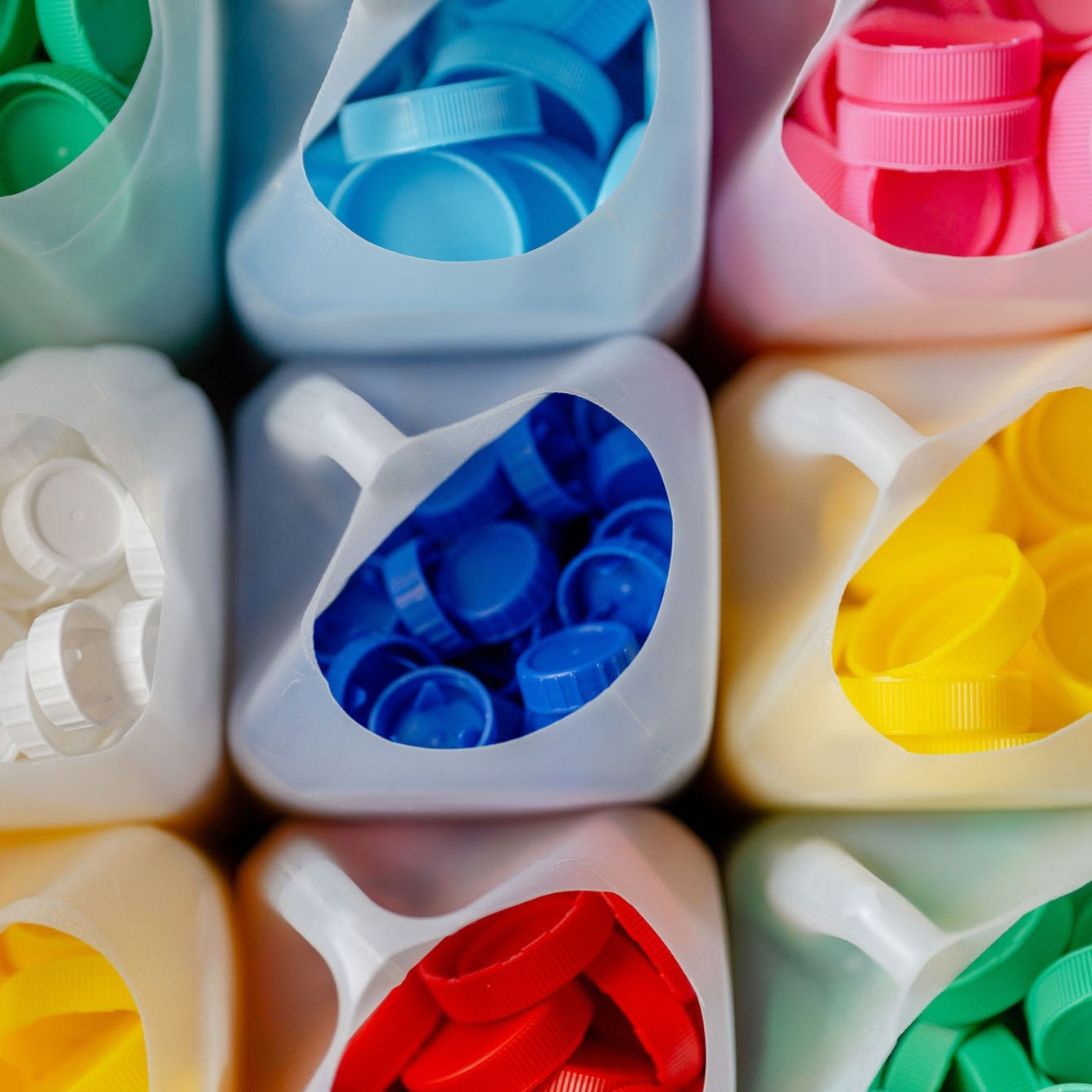
For plastic bottles and jars: take the lid off and put it in your BRAD box, because plastic lids are too small for kerbside sorting machinery. The bottle itself goes in the yellow bin. For glass jars: pop the metal lid back on loosely before placing both in the yellow bin.
Are coffee cups recyclable in Australia?
Standard takeaway coffee cups have a thin plastic lining that makes them non-recyclable in kerbside bins. The lid is sometimes recyclable if marked. BRAD accepts coffee cups and lids together. Better still, carry a reusable cup.
Should I bag my recyclables before putting them in the yellow bin?
No. Bagged recycling is one of the biggest causes of contamination at MRFs. Sorters cannot easily open bags, and the whole bag gets diverted to landfill. Tip everything in loose.
What is the single biggest mistake Australians make with recycling?
Wishful recycling: putting items in the yellow bin in the hope they can be recycled. If you are not sure, leave it out. A clean bale with a few extra items in landfill is more valuable than a contaminated bale that goes to landfill anyway. When in doubt, check Recycling Near You or pop it in a BRAD box.
Related reading
- How to recycle blister packs in Australia
- How to recycle razor blades in Australia
- How to recycle bread tags in Australia
- How to recycle makeup and cosmetics packaging in Australia
- The full BRAD accepted items list
About the author
Lottie Dalziel is the founder and editor in chief of Banish. She has a passion for the environment and wants to help educate and inspire individuals to make small changes towards a more sustainable future. Stay up to date with her latest challenges on Instagram @banish.au.