


What Can (and Can’t) Go in the Yellow Recycling Bin in Australia
The yellow recycling bin seems straightforward, but it’s the source of more confusion — and more well-intentioned mistakes — than almost any other sustainability topic. “Wishcycling” (putting things in the yellow bin and hoping for the best) is one of the biggest problems in Australian recycling, because contaminated loads can send an entire truck’s worth of material to landfill.
This guide sets the record straight: here is exactly what goes in, what stays out, and where the “tricky stuff” actually goes.

What CAN go in the yellow bin
Plastics (rigid, clean, and empty)
Most councils accept rigid plastic containers marked with recycling symbols 1 (PET), 2 (HDPE), and 5 (PP). These include:
- Water, soft drink, and juice bottles
- Milk, shampoo, and cleaning product bottles (large)
- Yoghurt, margarine, and deli containers
- Plastic punnets and trays (check locally — varies by council)
Remove lids from bottles before placing in the bin (send lids to BRAD instead). Clean and empty all containers — even a small amount of food residue can contaminate a whole batch.
Glass
- Glass bottles and jars (any colour) — clean and empty
- Remove metal lids before placing in the bin
Note: Some councils require glass to go in a separate bin or at a drop-off point. Check your council’s website. Broken glass should NOT go in the yellow bin; wrap carefully and place in general waste.
Metals
- Aluminium drink cans and food tins
- Steel tins and food cans (rinse out food residue)
- Aluminium foil (clean, scrunched into a fist-sized ball)
- Empty aerosol cans (completely empty, lid removed) — check locally
Paper and cardboard
- Cardboard boxes and packaging (flattened)
- Newspapers, magazines, and office paper
- Paper bags and envelopes (remove plastic windows)
- Cardboard food packaging (pizza boxes with minimal grease)
What CANNOT go in the yellow bin
| Item | Why not | Where it goes instead |
|---|---|---|
| Plastic bags and soft plastics | Jam sorting machinery | Soft plastic drop-off where available (REDcycle closed in 2022) |
| Coffee cups | PE-lined composite; can't be separated | BRAD or Simply Cups collection |
| Blister packs | PVC + aluminium composite | BRAD |
| Beauty packaging (pumps, mascara, etc.) | Mixed materials; too small | BRAD |
| Food waste | Contaminates recyclables | Green organics bin or compost |
| Dirty or greasy packaging | Contaminates batch | Rinse first, or general waste |
| Syringes and medical sharps | Hazardous | Council sharps disposal program |
| Batteries | Hazardous; fire risk | B-cycle drop-off at Bunnings, ALDI, Officeworks |
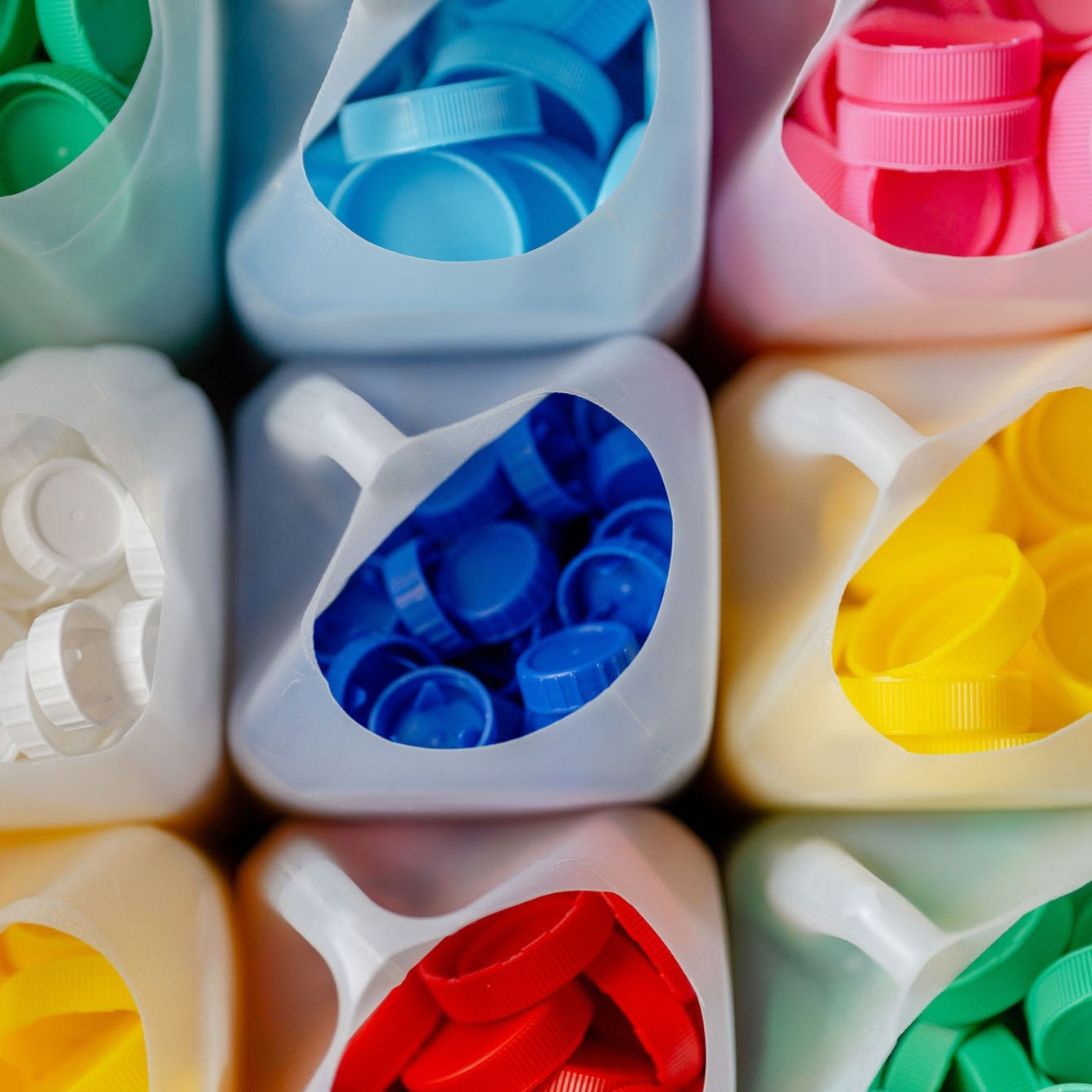
| Bottle caps and lids | Too small to sort | BRAD |
| Bread tags | Too small to sort | BRAD |
| Contact lens packaging | Composite material | BRAD |
| Nappies | Contaminated; mixed materials | General waste |
| Polystyrene foam | Breaks into small pieces; jams machinery | Check council for specialist drop-off |
| Electronic waste | Hazardous | Council e-waste collection or TechCollect |
The ‘tricky stuff’: where it actually goes
For the items that can’t go in the yellow bin, here’s a quick reference:
- BRAD by Banish: blister packs, beauty packaging, coffee cups, pens, bottle caps, bread tags, contact lens packaging, soy sauce fish, cutlery, and more.
- B-cycle: batteries of all types — free drop-off at Bunnings, ALDI, Officeworks, and others.
- Soft plastics drop-off: bread bags, plastic wrap, frozen food bags. The REDcycle scheme collapsed in 2022, so supermarket collection is no longer nationwide and what is on offer varies by area. Our guide to soft plastics recycling in Australia covers the current options.
- TechCollect: computers, TVs, printers, and other electronics — free drop-off across Australia.
- Recycling Near You: for everything else — search your postcode for local drop-off options.
Does recycling actually work in Australia?
Australia’s recycling rate for household materials is around 60%, according to the National Waste Report, but this varies significantly by material type. Aluminium and cardboard have very high recovery rates. Plastics overall are much lower — partly due to contamination from wishcycling. Clean, correct recycling habits at home genuinely improve overall recovery rates.
Frequently Asked Questions
What goes in the yellow recycling bin in Australia?
Clean, empty rigid plastics (types 1, 2, 5), glass bottles and jars, aluminium and steel cans, and paper and cardboard. Items must be clean and empty. Lids, soft plastics, food waste, and small items cannot go in the yellow bin.
Can you put plastic bags in the yellow bin?
No. Plastic bags and soft plastics jam sorting machinery at recycling facilities. Look for soft plastic drop-off bins at major supermarkets, or check recyclingnearyou.com.au for local options.
Can coffee cups go in the yellow recycling bin?
No. Takeaway coffee cups have a plastic polyethylene lining that prevents kerbside recycling. Send them to BRAD or a Simply Cups collection point.
What happens if I put the wrong thing in the recycling bin?
Contamination can reduce the quality of an entire batch of recyclables, sometimes causing the whole load to go to landfill. When in doubt, leave it out.
Where can I recycle things that don’t go in the yellow bin?
BRAD accepts a wide range of hard-to-recycle items including blister packs, beauty packaging, coffee cups, pens, bottle caps, bread tags, and more. B-cycle accepts batteries. TechCollect accepts electronics. Visit Recycling Near You for a full local guide.
Not sure what to do with your hard-to-recycle items?
The Banish Recycling and Diversion Program accepts hard-to-recycle household items by post or drop-off. Thousands of Australians use it every month.