


Where to Recycle Hard-to-Recycle Items in Brisbane (2026 Guide)
Brisbane households are luckier than most when it comes to recycling the awkward stuff, because Brisbane City Council runs four resource recovery centres that accept a long list of items free of charge. That covers a lot of ground. What it does not cover is the small, mixed, fiddly things that pile up in bathroom drawers and kitchen cupboards, and for those the answer is a pre-paid box posted to BRAD. Here is the full picture, layer by layer, so you know exactly where each item belongs.
First, what your yellow-lid bin actually takes
Brisbane City Council's guidance for the yellow-lid recycling bin is refreshingly clear. According to the council's recycling page, the bin takes paper, cardboard, aluminium and steel metals, unbroken glass, firm plastics and empty intact aerosol cans.
Two Brisbane rules surprise people, and both are worth committing to memory. The first is lids: council asks you to leave lids on bottles, containers and jars, because loose lids are too small to be processed. That is the opposite of the advice in some other cities, which is a good illustration of why national recycling advice is so often wrong for your own street. The second is bagging: do not put items in plastic bags before they go in the bin. You also do not need to rinse containers out in Brisbane.
What cannot go in: broken glass (a safety risk for facility staff), soft plastics and plastic bags, polystyrene foam, butane gas cans, and coffee cups except at participating locations. Hazardous materials such as paints, oils, chemicals, acids and batteries must never go in the rubbish or recycling bin.

Brisbane's resource recovery centres are the workhorse
Brisbane has four resource recovery centres: Nudgee and Willawong are the major sites, with Chandler and Ferny Grove as minor sites. Council lists them as open seven days a week, from 6.30am to 5.45pm.
Residential quantities of recycling and reusable items are free to drop off in the undercover recycling area. That free list includes batteries and items containing batteries, cardboard, paper and plastics, e-waste up to fifteen items, metal items, small appliances and white goods, fluorescent tubes and bulbs, and gas bottles (butane, LPG and propane, up to six per visit at a maximum of 9kg each). Tyres are not accepted at resource recovery centres.
General waste and green waste are charged, but every Brisbane household gets ten free waste vouchers each financial year, each valid for up to 100kg of general or green waste. Owners receive them with their rates notice and tenants are sent them to the household address in July. They cannot be used for commercial or hazardous waste, and residents of caravan parks and retirement villages are not eligible.
Chemicals, paint and pool supplies
Brisbane City Council splits household hazardous waste into two routes. Year round, the resource recovery centres take batteries, motor oil, paint and empty gas bottles. For the more serious items, including pesticides, pool chemicals, fuels, solvents, paint thinners, antifreeze and photographic chemicals, council runs free hazardous waste drop-off days at the recovery centres on scheduled dates. Limits apply: 20 litres per customer per visit for each chemical or product, up to 100 litres of paint or engine oil per visit in containers no larger than 20 litres each, and a maximum of six gas bottles at 9kg each. Asbestos, explosives, radioactive materials and commercial waste are not accepted.
Because the free drop-off days are scheduled rather than continuous, check council's event calendar or the Brisbane Bin and Recycling app for the next date before you load the car.

Batteries and e-waste
Batteries are accepted free at Brisbane's resource recovery centres, and you also have the national network. B-cycle, Australia's government-backed battery stewardship scheme, has accredited drop-off points around the country and takes standard handheld batteries such as AA, AAA, C, D, 9V, 6V and button batteries, rechargeable handheld batteries up to 5kg, batteries you can easily remove from tools and cameras, and e-scooter and e-bike batteries. It does not take mobile phone batteries, laptop or TV batteries, lead acid batteries or exit lighting batteries. Whichever route you use, tape the terminals with clear sticky tape first.
For e-waste, the recovery centres accept up to fifteen items per visit free, and MobileMuster, the federally accredited industry program, takes mobiles, chargers and accessories at no cost.
To be completely clear, because these are the two questions we field most often: BRAD does not accept batteries of any kind, and BRAD does not accept e-waste. Use the routes above for those.
Drink containers: Containers for Change
Queensland's container refund scheme, Containers for Change, pays 10 cents for every eligible container returned. Eligible containers are aluminium, glass, plastic, steel and liquid paperboard drink containers between 150mL and three litres. Not every container qualifies, so use the app or the searchable list on their site if you are unsure, and you can donate your refund to a community group instead of taking the cash.

The leftovers, and where BRAD comes in
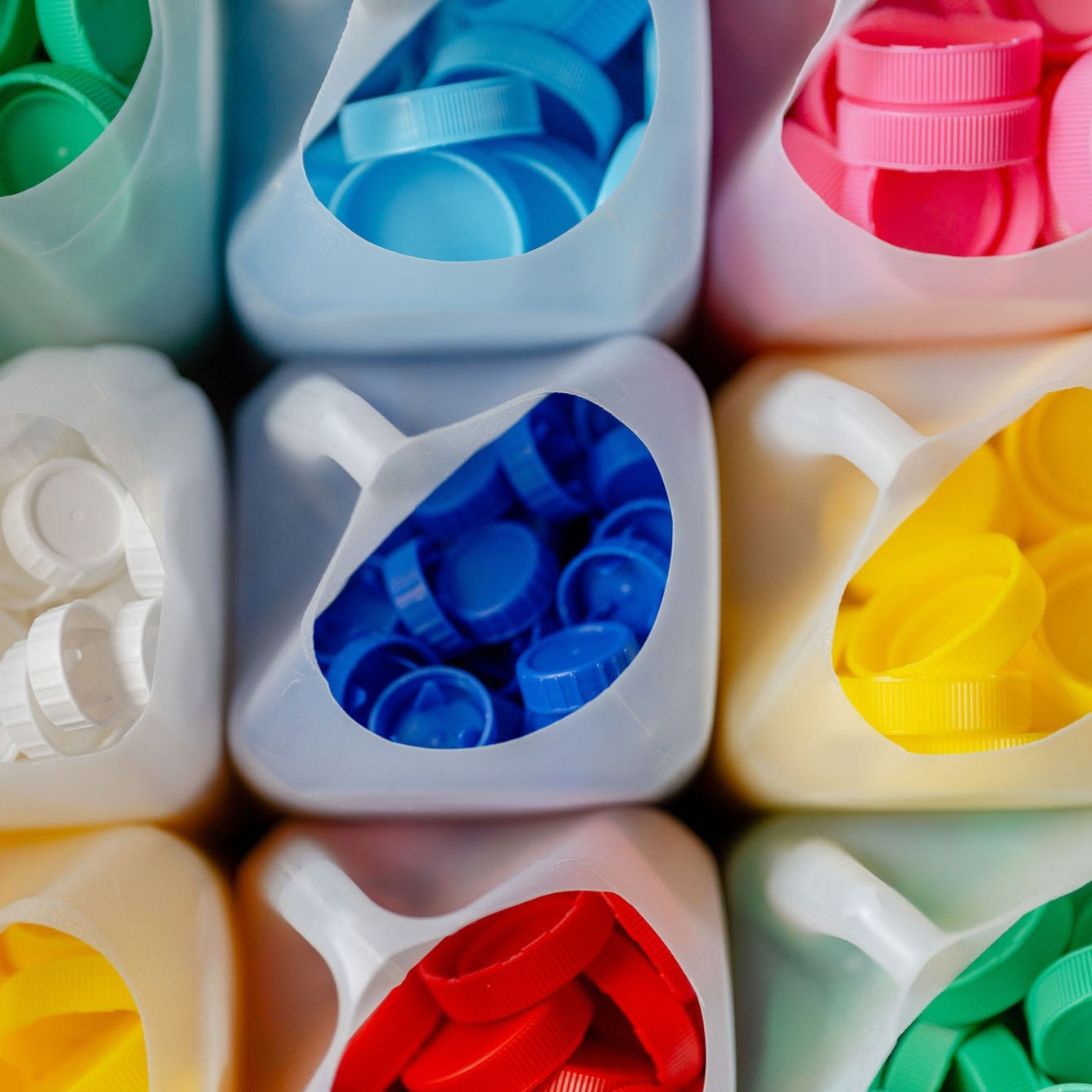
Do all of the above and you will still have a small, stubborn pile. Toothpaste tubes and old toothbrushes. Blister packs and Webster packs. Mascara tubes, lip balms, concealer sticks and empty eyeshadow palettes. Plastic bottle top lids. Dead biros and highlighters. Bread tags. Metal coffee pods. Single-use cutlery and straws. Wine corks. Old sunglasses and reading glasses. These items are not hazardous and not bulky, they are simply too small or too mixed for kerbside sorting machinery to catch, which is why they end up in landfill by default.
That is exactly the gap BRAD, the Banish Recycling and Diversion program, exists to fill. You order a pre-paid label, collect accepted items at home keeping everything clean, dry and loose, and drop the parcel at any Australia Post location. It comes to our Sydney warehouse, our team sorts it into material streams, and each stream goes to a specialist Australian micro-recycler.
There is no BRAD drop-off point in Brisbane. Our only physical drop-off is in Sydney, so for Queenslanders the postal label is the BRAD answer, and it works from any suburb. A BRAD Pre-paid Label for a shoebox-sized parcel up to 2kg is $18 digital or $23 printed, and a medium box up to 4kg is $30 digital or $35 printed. For an office, school or community group, the BRAD Mega Box is $290 for recycling processing with your own box, or $350 with the box and signage included.
And the honest bit, because a shorter accepted list you can trust beats a longer one you cannot: BRAD cannot take razors and razor blades, aerosol cans, perfume bottles, metal bottle tops, plastic or compostable coffee pods, inhalers and asthma puffers, eye drop bottles and single-use eye drops, syringes, insulin pens, prescription bottles, nasal sprays, bottle top rings and spouts, sponges and kitchen or makeup brushes, nail polish and remover bottles, glue sticks, pencils, erasers, rulers and scissors, or medical and bio-hazardous waste. Soft plastics are out too, and we cover your real soft plastics options here.
Recycling with BRAD from Brisbane
There is no BRAD drop-off in Brisbane, but the postal label works from every suburb. Fill a shoebox with clean, dry items from the accepted list and drop it at any Australia Post location.
See the full BRAD accepted items list or order a BRAD Pre-paid Label.
A quick Brisbane cheat sheet
- Drink containers: Containers for Change refund points, 10 cents each
- Pesticides, pool chemicals, solvents, fuels: free hazardous waste drop-off days at resource recovery centres
- Paint, motor oil, empty gas bottles: resource recovery centres, year round
- Batteries: resource recovery centres or B-cycle drop-off points, terminals taped
- Phones and chargers: MobileMuster, free
- Other e-waste: resource recovery centres, up to fifteen items free
- General and green waste: resource recovery centres, using your ten annual vouchers
- Bottle tops, oral care, blister packs, beauty empties, pens, bread tags, metal coffee pods: BRAD by post
Frequently asked questions
Is there a BRAD drop-off point in Brisbane?
No. BRAD's only in-person drop-off is in Sydney, at 490 Pitt Street, Haymarket. For Brisbane and the rest of Queensland, the BRAD answer is the pre-paid postal label, which you can drop at any Australia Post location.
Should lids go on or off in the Brisbane recycling bin?
On. Brisbane City Council asks residents to leave lids on bottles, containers and jars, because loose lids are too small to be processed. Advice differs between councils, so this rule applies to Brisbane specifically.
What can I take to a Brisbane resource recovery centre for free?
Residential quantities of recycling and reusable items are free, including batteries and items containing batteries, cardboard, paper and plastics, e-waste up to fifteen items, metal items, small appliances and white goods, fluorescent tubes and bulbs, and up to six gas bottles at a maximum of 9kg each. Tyres are not accepted, and general and green waste are charged unless you use your vouchers.
How many free waste vouchers do Brisbane residents get?
Ten per household each financial year, each valid for up to 100kg of general or green waste at a resource recovery centre. They cannot be used for commercial or hazardous waste, and caravan park and retirement village residents are not eligible.
Does BRAD take batteries or e-waste from Brisbane?
No. BRAD does not accept batteries of any kind, including lithium-ion, because of the fire risk in transit, and it does not accept e-waste, chargers, cables or fairy lights. Brisbane's resource recovery centres take both free of charge, and B-cycle and MobileMuster are the national alternatives.