


Where to Recycle Hard-to-Recycle Items in Adelaide (2026 Guide)
South Australia has a reputation for being ahead of the rest of the country on waste, and mostly it is deserved. We had the first container deposit scheme in Australia, organics bins are close to universal, and there is a free statewide drop-off network for the household chemicals most people are too nervous to move. Even so, if you live in Adelaide you almost certainly have a drawer or a shoebox of small things that do not belong in any of your three bins. Here is where each of them actually goes, layer by layer, finishing with the awkward leftovers you can post to BRAD.
Start with your three kerbside bins
Most Adelaide households have three bins: a yellow lid bin for mixed recycling, a green lid bin for food organics and garden organics, and a general waste bin. Planet Ark's kerbside listing for the City of Adelaide confirms the council supplies co-mingled recycling, general waste and a FOGO service, and the recycling bin takes the usual suspects: aluminium cans, steel food cans, glass bottles and jars, cardboard, newspapers, office paper and milk cartons.
What it does not take is anything small, soft or mixed. Soft plastics are not accepted in any Australian kerbside recycling bin, and we have written a separate guide on your real soft plastics options in Australia. Bin rules also vary between councils across greater Adelaide, so if you have moved recently, check your council's website rather than assuming your old rules travelled with you.
Drink containers: claim your 10 cents
South Australia's container deposit scheme has been running since 1977 and pays a 10 cent refund per eligible container. According to the South Australian EPA, the refund has been 10 cents since 2008, when it doubled from five cents, and eligible containers span glass, aluminium, PET, HDPE and liquid paperboard cartons. Plain milk and registered health tonics are excluded.
The EPA also notes that the South Australian Government has committed to including all beverage containers up to three litres in the scheme, excluding plain milk and registered health tonics, which would bring in wine and spirit bottles, juice and cordial containers and larger flavoured milks. A start date had not been published at the time of writing, so check the EPA's page before you start stockpiling wine bottles. If you want the full list of what counts today, we have a dedicated guide to the South Australian container deposit scheme.

Chemicals and paint: free, and easier than you think
This is the category people put off for years, and in South Australia it costs nothing to fix. Green Industries SA runs a household chemicals and paint drop-off service that is free of charge for householders and farmers, though not for businesses.
The accepted list covers acids and alkalis, batteries including NiCad, lithium and mercury types, cleaning products, engine oil, gardening chemicals such as pesticides, herbicides and insecticides, and liquid paints, both oil and water-based, up to 100 litres. It does not take asbestos, tyres or fertiliser, and pharmaceuticals should go back to a pharmacy instead. Metropolitan depots include the Adelaide Waste and Recycling Centre at North Plympton, the Campbelltown Works Depot, the NAWMA Resource Recovery Centre at Edinburgh North and the Heathfield Resource Recovery Centre.
The City of Adelaide confirms that hazardous household waste can be taken to the Green Industries SA depots and that it is a free service for all households. Paint also has a national scheme, Paintback, which takes unwanted paint and paint packaging free of charge, up to 100 litres per visit in containers no larger than 20 litres each.

Batteries: B-cycle, and never the bin
Loose batteries in a kerbside bin are one of the biggest causes of truck and facility fires in Australia. B-cycle is Australia's government-backed battery stewardship scheme, with accredited drop-off points around the country. It accepts standard handheld batteries such as AA, AAA, C, D, 9V and button cells, rechargeable handheld batteries up to 5kg, batteries you can easily remove from power tools and cameras, and e-scooter and e-bike batteries. It does not take mobile phone batteries, which go to MobileMuster, or laptop, TV, lead acid and exit lighting batteries. Tape the terminals with clear sticky tape before you drop them off.
Worth being clear here, because we get asked constantly: BRAD does not accept batteries of any kind, including lithium-ion, because of the fire risk in transit. B-cycle is the answer, and the Green Industries SA depots take several battery types too.
E-waste and the things with a plug
The City of Adelaide points residents to the Adelaide Waste and Recycling Centre at 181 Morphett Road, North Plympton, and the Beverley Waste and Recycling Centre at 2 to 6 Toogood Avenue, Beverley, for e-waste, and notes that Bunnings stores now act as e-waste drop-off points for items such as televisions, microwaves and computers. E-waste is also collected through the council's hard waste service.
MobileMuster, the federally accredited program run by the mobile phone industry, takes mobiles, chargers and accessories for free. BRAD does not accept e-waste, phones, tablets, chargers, cables or fairy lights, so please use these routes instead. If you are outside the City of Adelaide, check your council's website for its nearest e-waste facility.

The gap nobody fills, and how BRAD closes it
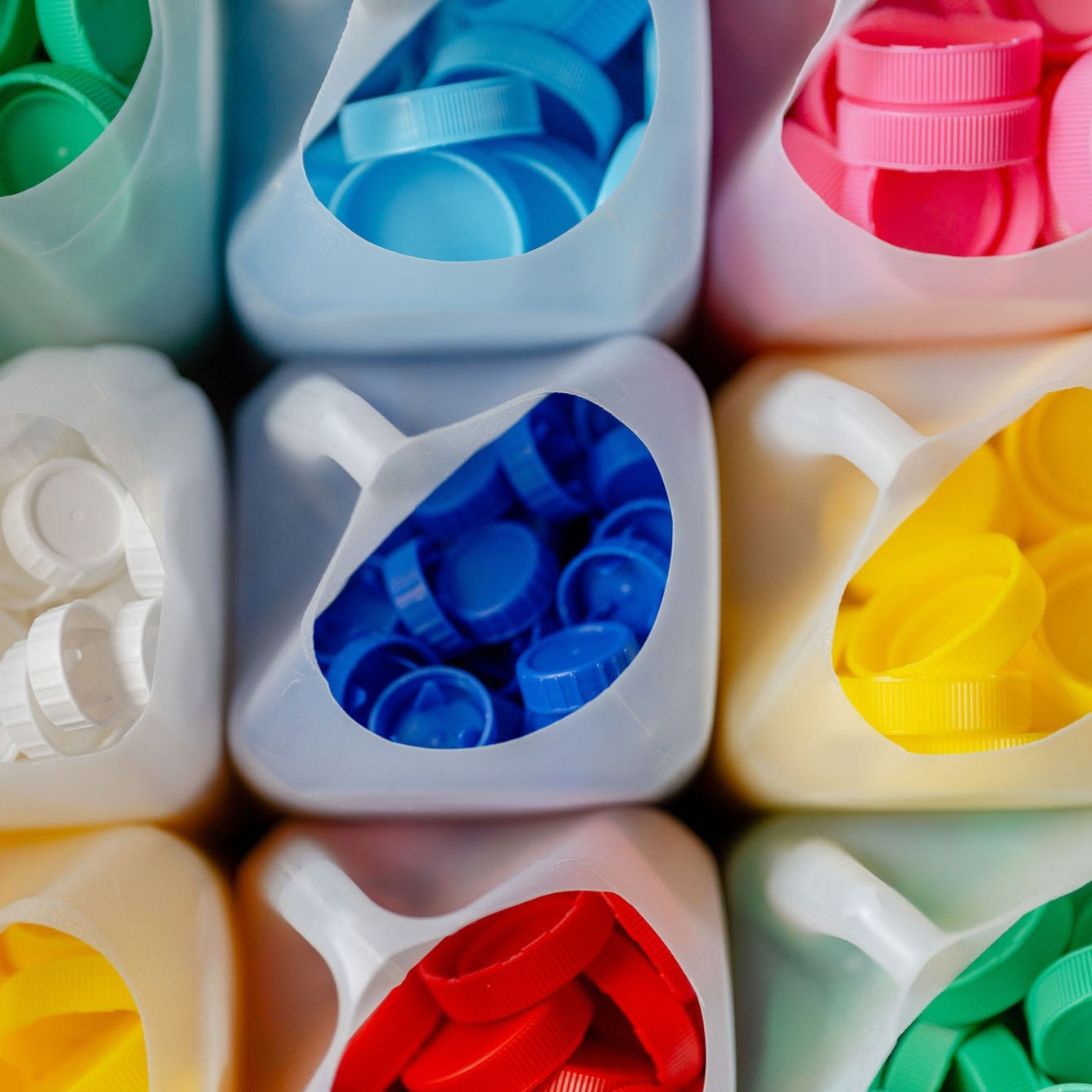
Work through all of the above and you will still have a pile left over. Plastic bottle top lids. Toothpaste tubes and old toothbrushes. Blister packs from the medicine cabinet. Mascara tubes and lip balms. Dead biros and highlighters. Bread tags. Metal coffee pods. Single-use cutlery from a party you meant to say no to. None of it is hazardous, none of it is bulky, and almost none of it is welcome in a yellow bin, because these items are too small or too mixed for kerbside sorting machinery to handle.
That is the gap BRAD, the Banish Recycling and Diversion program, was built to fill. You buy a pre-paid label, collect your clean, dry, loose items at home, and drop the parcel at any Australia Post location. Everything comes to our Sydney warehouse, gets sorted into material streams by our team, and goes to specialist Australian micro-recyclers.
Adelaide does not have a BRAD drop-off point. Our only in-person drop-off is in Sydney, so for South Australians the postal label is the BRAD answer, and it works from anywhere in the state. A BRAD Pre-paid Label for a shoebox-sized parcel up to 2kg is $18 for the digital version or $23 printed, and a medium box up to 4kg is $30 digital or $35 printed. If you are organising something for an office, school or community group, the BRAD Mega Box is $290 for recycling processing using your own box, or $350 with the box and signage included.
A quick word on honesty, because it matters more than a longer accepted list: BRAD does not take everything. Alongside batteries and e-waste, it cannot accept razors and razor blades, aerosol cans, perfume bottles, metal bottle tops, plastic or compostable coffee pods, inhalers and asthma puffers, eye drop bottles, syringes, insulin pens, prescription bottles, nasal sprays, bottle top rings and spouts, sponges and kitchen or makeup brushes, nail polish and remover bottles, glue sticks, pencils, erasers, rulers and scissors, or any medical or bio-hazardous waste.
Recycling with BRAD from Adelaide
There is no BRAD drop-off in Adelaide, but the postal label works from every suburb. Fill a shoebox with clean, dry items from the accepted list and drop it at any Australia Post location.
See the full BRAD accepted items list or order a BRAD Pre-paid Label.
A quick Adelaide cheat sheet
- Drink containers: container deposit scheme collection depots, 10 cents each
- Chemicals, pesticides, cleaners, engine oil, liquid paint: Green Industries SA depots, free for households
- Paint: Green Industries SA depots or Paintback sites, free
- Batteries: B-cycle accredited drop-off points, terminals taped
- Phones and chargers: MobileMuster, free
- Other e-waste: North Plympton or Beverley recycling centres, participating Bunnings stores, or hard waste collection
- Medicines: back to any pharmacy, never the depot or the bin
- Bottle tops, oral care, blister packs, beauty empties, pens, bread tags, metal coffee pods: BRAD by post
Frequently asked questions
Is there a BRAD drop-off point in Adelaide?
No. BRAD's only in-person drop-off is in Sydney, at 490 Pitt Street, Haymarket. For Adelaide and everywhere else in South Australia, the BRAD answer is the pre-paid postal label, which you can drop at any Australia Post location.
Where do I take household chemicals in Adelaide?
Green Industries SA runs a household chemicals and paint drop-off service that is free for householders and farmers. Metropolitan depots include the Adelaide Waste and Recycling Centre at North Plympton, the Campbelltown Works Depot, the NAWMA Resource Recovery Centre at Edinburgh North and the Heathfield Resource Recovery Centre. Asbestos, tyres and fertiliser are not accepted, and pharmaceuticals should go back to a pharmacy.
How much is the container refund in South Australia?
Ten cents per eligible container. The South Australian EPA says the refund has been 10 cents since 2008, when it doubled from five cents, and that the government has committed to expanding the scheme to all beverage containers up to three litres, excluding plain milk and registered health tonics. Check the EPA's page for the current list before you sort a large stockpile.
Can I put batteries in my Adelaide recycling bin?
No. Batteries must never go in any kerbside bin because of the fire risk to trucks and sorting facilities. Take them to a B-cycle accredited drop-off point with the terminals taped, or to a Green Industries SA depot. BRAD does not accept batteries either.
What can I do with plastic bottle top lids in Adelaide?
Small plastic lids are a common problem for kerbside sorting machinery because they are light and easy to miss, so many councils ask you to keep them out of the recycling bin. Plastic bottle top lids are on the BRAD accepted list, so collect them at home and post them in. Check your council's website if you are unsure of your local rule.
Related reading
- Where to recycle hard-to-recycle items in Perth
- Where to recycle hard-to-recycle items in Melbourne
- What can actually go in your yellow bin in Australia
- How to recycle coffee pods in Australia