

The Plastics Breakdown - What You Can and Can’t Recycle
By Lottie Dalziel, Founder of Banish · Last updated: May 2026
If you've ever stood at the bin holding a yoghurt tub and a takeaway container and thought "wait, which one of these can I actually recycle?" — you are not alone, and you are not wrong to be confused. Australia's plastic recycling system is genuinely messy. The plastic recycling symbols on packaging look like recycling logos, but they aren't. The rules change between councils. And since the collapse of RedCycle in late 2022, the soft plastics situation has been in limbo.
This is the full Banish guide to the seven plastic recycling symbols in Australia, what they actually mean, and which ones your yellow kerbside bin will (and won't) accept in 2026. We've gone symbol-by-symbol and added what to do with the awkward stuff your council won't take.
First, the symbol on the bottom is not a recycling symbol
That little triangle with a number inside it that you see on the bottom of plastic bottles, tubs and containers? It is a Plastic Identification Code (PIC), sometimes called a resin identification code. It tells you what kind of plastic the item is made of. It does not tell you whether the item is recyclable, and it does not mean a council will accept it.
Some plastic codes (PET, HDPE, PP) are well-recycled through kerbside in most Australian councils. Others (PVC, PS) almost never are. The number is a starting point, not the answer. Your council's A-Z list is the final word, and most councils have one online.
The 7 plastic recycling symbols in Australia, code by code
Here's every code, what plastic it is, where you'll find it, and the honest answer on whether your yellow bin will take it.
| Code | Plastic | Common uses | Yellow bin in Australia? | If not, where? |
|---|---|---|---|---|
| 1 | PET / PETE (Polyethylene Terephthalate) | Water and soft drink bottles, peanut butter jars, salad dressing bottles, berry punnets, meat trays | Yes — empty, rinsed, lid on | Eligible bottles go via the Container Deposit Scheme for 10c refund |
| 2 | HDPE (High Density Polyethylene) | Milk bottles, shampoo bottles, laundry detergent, ice cream tubs, juice bottles | Yes — empty, rinsed | Pump and trigger spray tops to BRAD or Officeworks |
| 3 | PVC (Polyvinyl Chloride) | Cling film, blister packs, pipes, vinyl flooring, garden hoses, some bottles | No in most councils. Rigid PVC sometimes; soft PVC almost never | Blister packs to BRAD. Construction PVC via specialist recyclers |
| 4 | LDPE (Low Density Polyethylene) | Bread bags, frozen food bags, bin liners, squeeze bottles, plastic shopping bags | No — too soft for kerbside sorting | Soft plastics: limited Curby (NSW select councils) or council-run trials. RedCycle is gone |
| 5 | PP (Polypropylene) | Yoghurt tubs, takeaway containers, butter tubs, bottle caps, plant pots, ice cream tub lids, microwave-safe containers | Yes — empty, rinsed | Plant pots also to Bunnings green tray return |
| 6 | PS (Polystyrene) | Foam meat trays, foam coffee cups, packaging foam, plastic cutlery, yoghurt pots (some) | No — neither foam nor rigid PS is accepted in most councils | Polystyrene drop-off via some council resource recovery centres. Otherwise general waste |
| 7 | Other (PLA, PC, ABS, nylon, mixed) | Reusable water bottles, sunglasses, baby bottles (older), DVDs, "compostable" PLA plastics, electronics housings | No — too varied to sort | E-waste to Officeworks Bring It Back. PLA needs commercial composting (rarely available in Australia) |
The blunt summary: codes 1, 2 and 5 are your reliable yellow-bin friends in nearly every Australian council. Code 3 (PVC), 4 (LDPE), 6 (PS) and 7 (Other) are usually not. If you only remember one thing, remember that.
The post-RedCycle reality: where soft plastics actually go now
For over a decade, the answer to "what do I do with bread bags and biscuit wrappers?" was RedCycle. You dropped them at Coles or Woolworths and the system did the rest. In November 2022, RedCycle paused collection. By 2023 it was confirmed: thousands of tonnes of soft plastics had been stockpiled in warehouses around the country, with nowhere to be recycled. The program has not returned.
So what now? In 2026 the soft plastics picture is patchy but improving:
- Curby runs in a handful of NSW councils, offering a kerbside-collected orange bag for soft plastics.
- The Soft Plastics Taskforce (Coles, Woolworths, ALDI) runs in-store collection trials at limited Australian stores. Coverage is still small.
- Recycle Smart offers a paid home pickup service for soft plastics in metro NSW, VIC, ACT.
- If none of those work for your area, soft plastics currently belong in the red bin. We hate writing that as much as you hate reading it, but pretending you can stuff them in the yellow bin contaminates everyone else's recyclables and ruins the whole load.
The yellow-bin rules of thumb that actually work
For the rigid plastics you can recycle, here's how to give your local Material Recovery Facility (MRF) the best chance of capturing them:
- Empty and rinse. A residue of yoghurt is fine; a half-full bottle of milk is not. Liquid contamination ruins paper recyclables in the same truck.
- Lids on. Used to be lids off; now most Australian councils prefer lids on for bottles, because loose lids fall through the sorting screens and end up in landfill anyway.
- Don't bag your recycling. Plastic bags jam the sorting machinery and the whole bag often ends up in landfill. Loose items into the yellow bin.
- Bigger than a credit card. Items smaller than that slip through the screens at the MRF. Smush small plastic into a bigger plastic container if you can.
- No "wishcycling". Putting something into the yellow bin hoping it gets recycled doesn't make it true. It just contaminates the load.
The plastics your yellow bin won't take (and where to send them)
This is the bit where BRAD comes in. There's a long list of plastic items that aren't kerbside-recyclable in Australia, but they are recyclable somewhere. Banish's BRAD program accepts a curated list of these items in one box, sent in by post. The accepted list is updated regularly, so it is worth checking what BRAD does and doesn't accept before you pack. Specifically:
- Blister packs (medication packs) — code 3 PVC plus aluminium
- Nespresso pods (or via Nespresso's own scheme)
- Toothbrushes, toothpaste tubes — mixed plastic and metal
- Cosmetics packaging — small mixed plastics
- Pens — mixed plastics, and the ones we make from recycled lids are our Recycled BRAD Plastic Pens
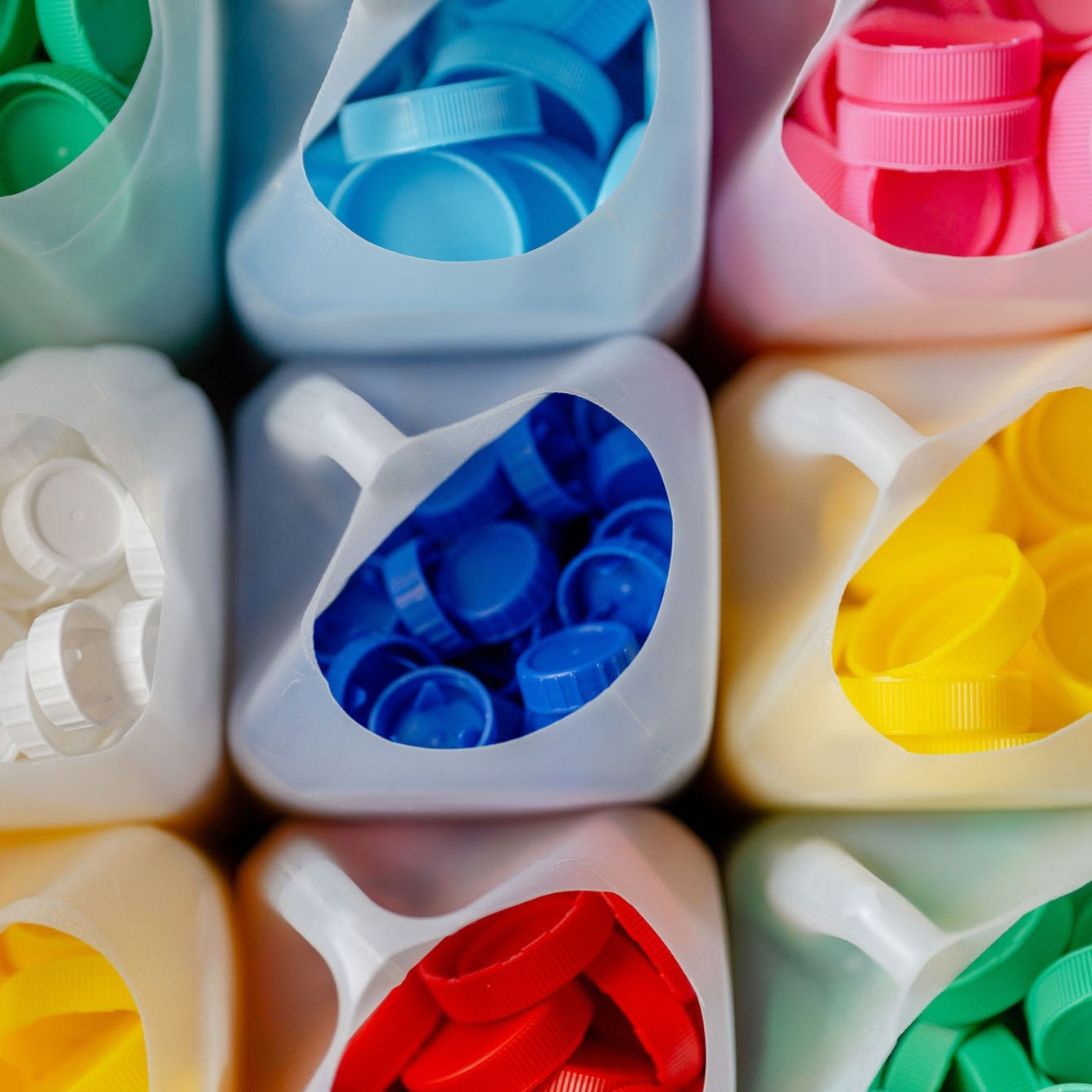
BRAD also accepts plastic bottle top lids, which are washed, sorted by colour and shredded here in Sydney. Some of them come back as Recycled Shredded Plastic Flakes for makers and schools to use in their own projects.
What BRAD does not take: soft plastics (including bread bags, chip packets and stand-up pouches), e-waste, phones, chargers, cables, fairy lights, lithium-ion batteries. Soft plastics go to Curby, the Soft Plastics Taskforce trial stores or Recycle Smart; e-waste to Officeworks Bring It Back (small electricals), MobileMuster (phones), B-cycle (batteries) or council e-waste drop-off.
What the plastic numbers really decide
The number doesn't decide whether a council recycles your container — that's set by what the local MRF can sort and what end-buyers will pay for. What the number does decide is what new product the recycled plastic can become:
- PET (1) becomes new PET bottles, polyester clothing fibre, carpet, food trays.
- HDPE (2) becomes new shampoo bottles, pipes, plastic timber, milk crates.
- PP (5) becomes plant pots, automotive parts, new food containers.
- The others have far fewer end-markets in Australia, which is why your council won't take them.
That's also why the Container Deposit Scheme matters so much. Eligible PET and HDPE bottles returned through the scheme stay clean and uncontaminated, which means they fetch a much higher price as recycling feedstock and almost certainly get recycled into a new bottle. Yellow-bin PET is often too contaminated to bottle-to-bottle recycle and ends up as a lower-grade product. If you are not sure how the scheme works in your state, our guide to the container deposit scheme in Australia walks through it.
Frequently Asked Questions
What plastic numbers can be recycled in Australia?
Plastic codes 1 (PET), 2 (HDPE) and 5 (PP) are accepted in kerbside yellow bins in nearly every Australian council. Codes 3 (PVC), 4 (LDPE), 6 (PS) and 7 (Other) generally are not, and need specialist programs. Always rinse, replace lids, and don't bag your recyclables.
Are plastic recycling symbols the same as recycling logos?
No. The triangle with a number on plastic packaging is a Plastic Identification Code, not a recycling symbol. It tells you what resin the plastic is made of, not whether your council will recycle it. The Australasian Recycling Label (the bin-symbol system on supermarket packaging) is the more useful one for kerbside.
Where do I take soft plastics now that RedCycle is gone?
Options in 2026 include Curby (NSW select councils), the Soft Plastics Taskforce trial stores at Coles, Woolworths and ALDI, and Recycle Smart's paid home pickup in metro areas. If none of those work in your area, soft plastics currently belong in the red bin.
Can polypropylene be recycled in Australia?
Yes. PP (code 5) is widely accepted in kerbside yellow bins across Australia. Empty, rinse and put the container in loose. Yoghurt tubs, takeaway containers, plant pots and bottle caps all qualify.
Is PET recycling actually closed-loop in Australia?
Closer than it used to be. Cleanaway, Pact Group and Asahi opened a PET recycling plant in Albury in 2022 that produces food-grade rPET pellets from CDS-collected bottles. Container Deposit Scheme bottles are most likely to go bottle-to-bottle. Yellow-bin PET often gets downcycled into fibre or low-grade plastic.
What is the difference between PET and HDPE?
PET (code 1) is the clear, lightweight plastic used for soft drink and water bottles. HDPE (code 2) is the firmer, more opaque plastic used for milk bottles and shampoo bottles. Both are widely recycled in Australia, but they go through separate processing streams at the MRF (sorted by optical scanners).
Can I recycle plastic with food residue in it?
Light residue is fine, heavy residue isn't. A quick rinse with the last of your dishwashing water is enough. Half-full bottles or food-coated trays contaminate paper recyclables in the same truck, and a whole truckload can be downgraded or sent to landfill because of a few greasy items.
What does "compostable" plastic actually do?
"Compostable" plastic (usually PLA, code 7) only breaks down in industrial composting facilities at high temperatures over weeks. Most Australian council FOGO programs don't accept compostable plastics, and it absolutely won't break down in your backyard heap or in landfill. Look for AS 4736 (industrial) or AS 5810 (home) certification to know what's real.
Recycle this with BRAD
The plastics your yellow bin turns away, like blister packs, bottle top lids, pens and beauty packaging, can go in one BRAD box instead of the red bin.